Mahindra Rolls Out Doorstep EV Service Vans in Delhi to Strengthen After-Sales Network
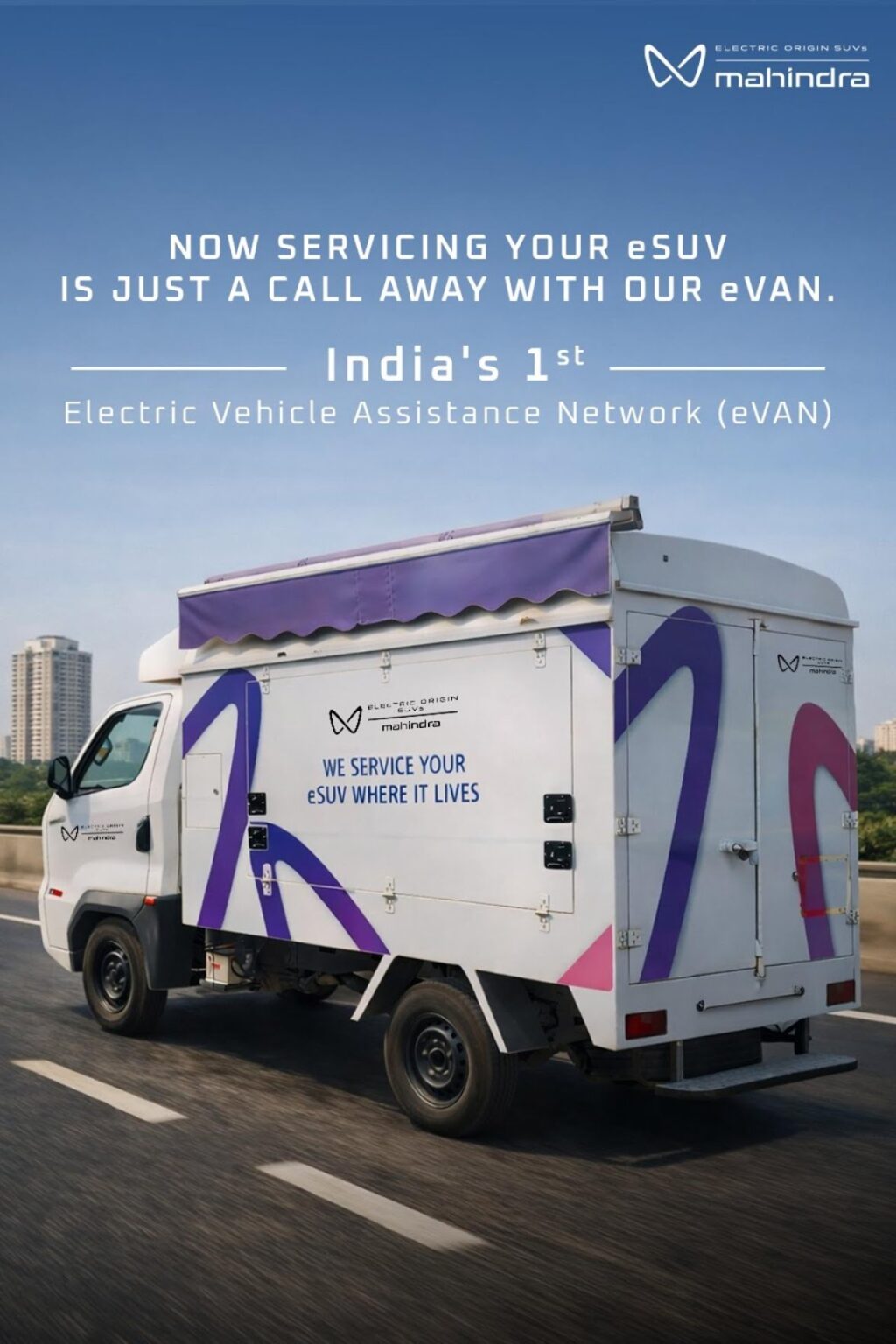
Mahindra has introduced a fleet of dedicated service vans in Delhi to provide doorstep maintenance and repair support for its electric vehicles. The initiative aims to enhance customer convenience, reduce vehicle downtime and reinforce trust in EV ownership amid rising adoption in urban India. Equipped with diagnostic tools and trained technicians, the mobile units will handle routine servicing, minor repairs and software updates at customers’ homes or workplaces. The move signals a strategic shift toward service-led differentiation in India’s competitive EV market, where after-sales infrastructure is increasingly becoming a decisive factor for buyers.
Expanding EV Ecosystem Through Mobile Servicing
Mahindra has launched mobile service vans in Delhi designed specifically for electric vehicle maintenance. The initiative reflects the automaker’s broader strategy to strengthen after-sales support as EV adoption accelerates across metropolitan markets.
The service vans are equipped with specialized diagnostic equipment and tools tailored for electric drivetrains, battery systems and connected vehicle technologies. Certified technicians will operate the units, offering customers on-site inspections, routine servicing and minor technical fixes without requiring a workshop visit.
By bringing maintenance directly to consumers, Mahindra aims to minimize service delays and address one of the most common concerns associated with EV ownership: accessibility of reliable support.
Strategic Importance of After-Sales Infrastructure
India’s electric vehicle market is entering a phase of rapid expansion, driven by policy incentives, rising fuel costs and environmental awareness. However, customer confidence often hinges on robust service infrastructure.
Unlike conventional internal combustion engine vehicles, EVs rely heavily on advanced electronics, battery management systems and software integration. As a result, specialized service capability becomes critical.
Industry analysts note that automakers who invest early in after-sales innovation may gain a competitive edge. Mobile service solutions not only reduce logistical bottlenecks but also enhance brand loyalty by prioritizing customer convenience.
Mahindra’s move signals recognition that service quality can be as influential as product specifications in purchasing decisions.
Reducing Downtime and Enhancing Customer Experience
One of the primary objectives of the doorstep service model is to reduce vehicle downtime. Traditional service center visits can involve long wait times and logistical inconvenience, particularly in congested urban centers like Delhi.
With mobile servicing, routine maintenance such as battery health checks, software updates and component inspections can be conducted at a customer’s residence or workplace. This approach aligns with evolving consumer expectations shaped by on-demand service models across industries.
From an operational standpoint, mobile units may also help optimize workshop capacity by filtering out minor service cases that do not require full facility resources.
EV Market Dynamics and Competitive Landscape
Delhi has emerged as one of India’s leading EV markets, supported by state-level incentives and infrastructure development. As competition intensifies among manufacturers, service differentiation is becoming a critical battleground.
Automakers are increasingly integrating digital platforms with service operations, enabling remote diagnostics, predictive maintenance alerts and streamlined booking systems. Mobile vans complement these technologies by offering physical support where required.
By deploying such units in the capital, Mahindra positions itself to capture urban EV demand while reinforcing reliability perceptions among early adopters.
Long-Term Implications for the Industry
The rollout of doorstep EV maintenance services may indicate a broader transformation in India’s automotive after-sales ecosystem. As electric vehicles contain fewer mechanical components than traditional vehicles, service models are expected to shift toward software management, battery optimization and preventive diagnostics.
Mobile servicing could become a scalable model in high-density cities, reducing infrastructure costs while expanding reach. For manufacturers, it offers an opportunity to gather real-time performance data and strengthen customer engagement.
Conclusion
Mahindra’s introduction of EV service vans in Delhi reflects a forward-looking approach to customer support in a rapidly evolving automotive landscape. By prioritizing accessibility and efficiency, the company is responding to practical concerns that influence EV adoption.
As India accelerates toward electrification, the success of such initiatives may depend not only on vehicle innovation but also on how effectively manufacturers build trust through reliable, convenient service networks.