FIR Filed Against Sonia Gandhi and Rahul Gandhi Following ED Complaint in National Herald Case
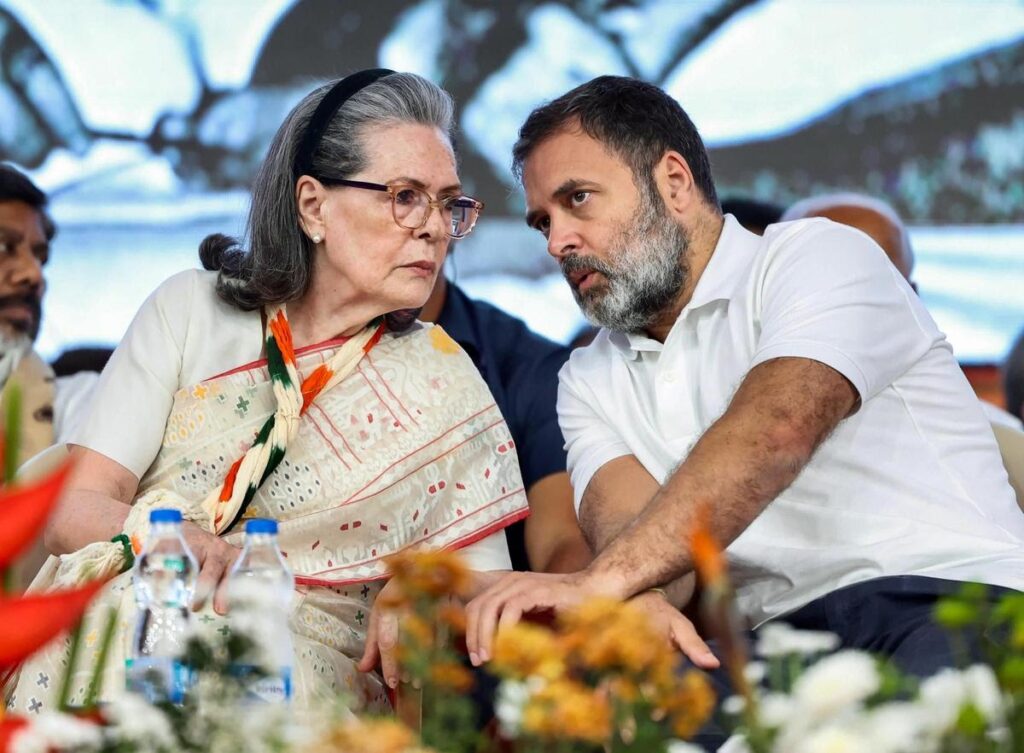
Delhi Police have registered an FIR against senior Congress leaders Sonia Gandhi and Rahul Gandhi after the Enforcement Directorate (ED) submitted a detailed complaint regarding alleged financial discrepancies linked to the National Herald newspaper. The case, which has resurfaced multiple times over the years, centers on accusations of fund misappropriation, questionable asset transfers, and violations of financial norms. The police action marks a significant escalation in a politically sensitive matter that has long been a flashpoint between the Congress party and investigative agencies. The developments could reshape legal, political, and public discourse as authorities pursue deeper scrutiny into the financial trail.
A New Phase in a Long-Running Controversy
Delhi Police have formally lodged a First Information Report (FIR) against Congress leaders Sonia Gandhi and Rahul Gandhi, acting on a comprehensive complaint submitted by the Enforcement Directorate. The move revives the National Herald investigation, which has remained a contentious issue in India’s political arena for more than a decade. The ED’s complaint alleges a series of violations involving the acquisition, management, and financial restructuring of Associated Journals Ltd. (AJL), the company behind the National Herald publication.
The FIR signals heightened law enforcement attention to transactions that reportedly involve irregular fund flows, undervalued asset transfers, and the use of political influence to facilitate corporate maneuvering. With this step, investigating agencies appear poised to deepen their inquiry into the financial and governance framework that underpins the case.
Background of the Allegations
The dispute traces back to allegations that Young Indian Pvt. Ltd., a company linked to the Gandhis, acquired control of AJL through transactions deemed questionable by the ED. Investigators have long maintained that the transfer of assets—valued at several crores—took place without adequate consideration, potentially violating various provisions of financial and corporate law.
Officials allege that funds originally intended for party-linked activities were redirected to facilitate the takeover. The Congress leadership has repeatedly dismissed the accusations as politically motivated, asserting that the transactions were fully compliant with legal and accounting standards.
The FIR: What It Means Legally and Politically
The decision by Delhi Police to file the FIR marks a formal acknowledgment of the ED’s concerns. Legally, this opens the door to a broader probe that may include witness statements, forensic audits, and financial tracking. The severity of the complaint suggests that multiple sections of the Indian Penal Code—possibly relating to cheating, criminal conspiracy, and breach of trust—may be invoked as the investigation unfolds.
Politically, the development adds another layer of complexity to the national discourse, particularly at a time when scrutiny of public figures and their financial dealings remains intense. The FIR may also influence legislative dynamics, media narratives, and public sentiment, especially among voters sensitive to issues of transparency and governance.
Congress Response and Wider Implications
Congress leaders have criticized the FIR as an extension of what they claim is targeted political pressure, asserting that the case has repeatedly been revived to discredit opposition voices. Party representatives argue that the National Herald transactions were charitable in nature and did not involve personal gain.
However, financial experts observe that the case raises broader questions about corporate governance standards within political entities, the handling of legacy assets, and accountability in financial restructuring. The outcome of the investigation could set important precedents for how political organizations manage and disclose their financial operations going forward.
Looking Ahead
The FIR marks a significant development in a dispute that blends political rivalry, financial scrutiny, and legal interpretation. As Delhi Police and the ED continue to unravel the financial details, the coming months are likely to bring further revelations and intensified political debate.
Whatever the eventual verdict, the case underscores the evolving expectations of transparency and compliance in India’s public and political spheres—signaling that even historical institutions and powerful leaders are not insulated from the law’s expanding reach.