Markets End Flat as Volatility Persists; Investors Await Inflation Data and Global Cues
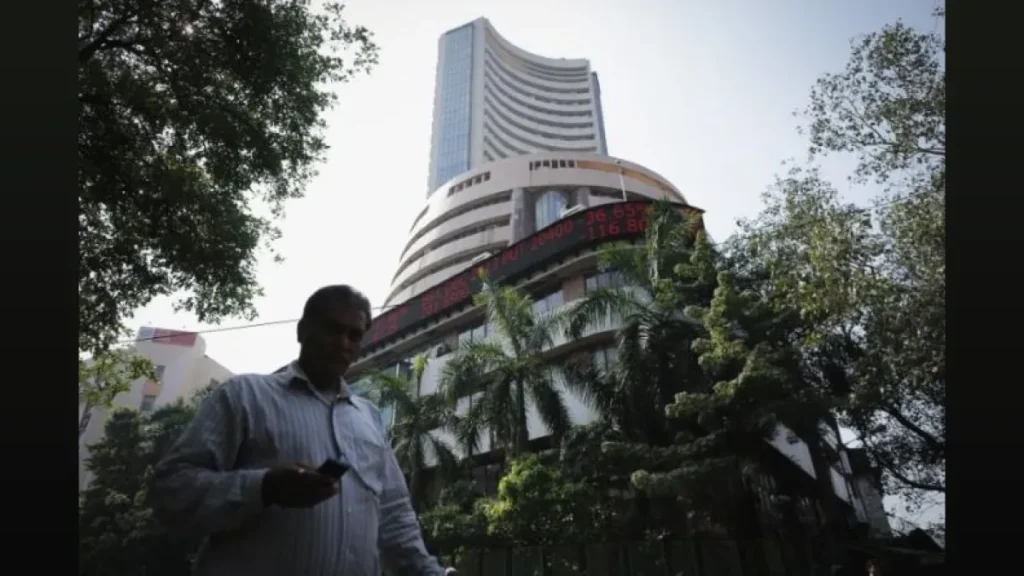
Indian equity benchmarks ended largely unchanged after a volatile trading session on Thursday, as investors balanced mixed global cues and awaited key inflation data for further direction. The Sensex and Nifty oscillated between gains and losses throughout the day, reflecting cautious sentiment amid concerns over elevated valuations and global economic uncertainty. Banking and metal stocks witnessed selective buying, while IT and FMCG shares came under pressure. Broader markets mirrored the choppy trend, with mid-cap and small-cap indices closing marginally lower. Analysts expect short-term consolidation before a potential breakout, depending on upcoming macroeconomic indicators and global market trends.
Volatility Defines Market Sentiment
Indian equities traded in a narrow range, exhibiting significant intraday volatility as participants refrained from aggressive positions ahead of the release of domestic and U.S. inflation figures. The BSE Sensex closed almost unchanged, marginally declining by 0.04% to 77,845, while the NSE Nifty 50 edged down 0.03% to settle at 23,550. The session opened on a firm note following overnight strength in select Asian markets but soon lost momentum amid profit booking in heavyweight stocks and weak cues from European indices.
Market participants cited conflicting global signals — optimism over steady corporate earnings versus concerns about higher-for-longer interest rates — as the key driver behind the day’s volatility.
Sectoral Performance: Mixed Trends Continue
The trading pattern remained highly sector-specific. The Bank Nifty gained around 0.5%, supported by buying in private lenders and select PSU banks. Metal stocks also advanced, tracking firm global commodity prices, with major players like Tata Steel and Hindalco posting modest gains.
Conversely, IT and FMCG counters dragged the indices lower amid selling pressure in frontline names such as Infosys, TCS, and Hindustan Unilever. Weak global demand forecasts for technology exports and subdued rural consumption trends weighed on investor sentiment in these sectors.
Broader markets underperformed slightly, with the Nifty Midcap 100 and Smallcap 100 indices shedding around 0.2%, signaling cautious positioning among retail investors.
Foreign Flows and Domestic Triggers
Foreign institutional investors (FIIs) remained net sellers for the third consecutive session, pulling out nearly Rs. 450 crore, while domestic institutional investors (DIIs) continued to absorb some of the pressure, purchasing shares worth Rs. 380 crore. This tug-of-war between institutional flows kept the market directionless.
Analysts noted that the rupee’s marginal weakness against the U.S. dollar and rising crude oil prices added to the cautious tone. The upcoming Consumer Price Index (CPI) inflation data will likely dictate the Reserve Bank of India’s near-term stance, influencing rate-sensitive sectors like banking, real estate, and autos.
Global Cues and Investor Outlook
Global equities exhibited mixed trends, with Wall Street closing slightly lower amid concerns that inflation could remain sticky, prompting central banks to delay policy easing. Asian markets, including Japan and South Korea, traded on a firmer footing, while European bourses opened weak due to renewed geopolitical tensions and energy price fluctuations.
Indian markets mirrored this uncertainty. Traders and fund managers expect sideways movement until clearer signals emerge on inflation, global interest rates, and the U.S. Federal Reserve’s future policy trajectory.
Expert View: Cautious Optimism Ahead
Market strategists believe that Indian equities may witness a phase of consolidation before resuming an upward trend. “The index is likely to trade in a defined range as investors digest global data points,” said a senior analyst at a leading brokerage. “A decisive move above Nifty 23,650 could trigger a fresh rally, while support is seen near 23,400.”
Despite near-term jitters, experts remain optimistic about India’s long-term growth prospects, supported by robust domestic demand, steady earnings momentum, and policy reforms. However, they caution that sustained foreign outflows or disappointing macro data could extend the consolidation phase.
Final Words
Thursday’s market action reflected the underlying uncertainty that often precedes key economic announcements. While volatility is likely to persist in the near term, analysts agree that India’s structural fundamentals remain strong, offering resilience amid global turbulence. For investors, maintaining a balanced portfolio with exposure to defensive sectors and selective value picks could be prudent until a clearer market direction emerges.