Tata Motors Accelerates EV Strategy With Three Major Launches Planned for 2026
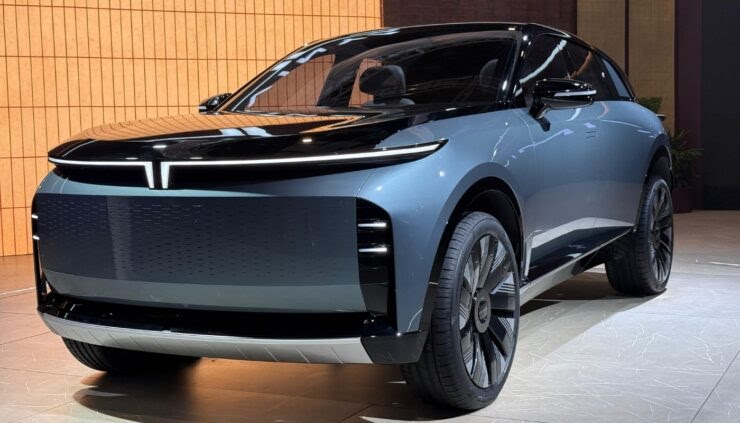
Tata Motors is preparing to strengthen its leadership in India’s electric passenger vehicle market with the launch of three new electric models in 2026. Holding more than 50 percent market share in the domestic EV segment, the company is expanding its portfolio across entry-level, premium and lifestyle categories. The upcoming Tata Tiago EV facelift, the first production model from the Avinya sub-brand and the Sierra EV signal a multi-tiered growth strategy. With evolving battery technology and improved features, Tata aims to consolidate its dominance in India’s rapidly expanding electric mobility ecosystem.
Market Leadership and Expansion Strategy
Tata Motors currently commands over half of India’s electric passenger vehicle market, a position built on early investments in localized EV platforms and accessible pricing strategies. As competition intensifies, the company is moving swiftly to fortify its advantage through strategic product refreshes and premium electric offerings.
The recent rollout of electric variants in its SUV and hatchback segments has laid the foundation for broader expansion. Now, with three additional launches planned within the calendar year, Tata appears focused on strengthening both volume and value segments.
Tata Tiago EV Facelift: Upgrading the Entry-Level Segment
The updated Tata Tiago EV is expected to receive comprehensive design and feature revisions. Visual updates may include redesigned LED headlamps, sharper daytime running lights, a reshaped front fascia and revised bumpers. Larger outside rearview mirrors could hint at the integration of a 360-degree camera system.
Inside the cabin, improvements in materials and finish are anticipated, along with feature enhancements such as wireless smartphone charging, expanded connected car technology and a larger infotainment display paired with a fully digital instrument cluster.
Industry speculation suggests that the facelifted model may adopt a 30 kWh battery pack similar to the one deployed in the Punch EV, potentially extending driving range and improving efficiency. Such upgrades would help Tata reinforce its foothold in the affordable EV segment, where price sensitivity and feature value are critical.
Avinya: Tata’s Premium Electric Ambition
Tata’s premium ambitions will likely materialize through the launch of the first production vehicle under the Tata Avinya banner. Positioned above the current EV lineup, Avinya represents a strategic push into the higher-margin electric vehicle segment.
The production model is expected to adopt a sportback-inspired silhouette and sit on a localized version of Jaguar Land Rover’s EMA platform, reflecting technological collaboration within the group. This architecture is designed to support advanced battery configurations, improved structural rigidity and enhanced software-defined vehicle capabilities.
The Avinya range could mark Tata’s transition from mass-market dominance to premium electrification, targeting consumers seeking design differentiation and next-generation digital integration.
Sierra EV: Reviving a Legacy in Electric Form
The reimagined Tata Sierra EV is poised to capitalize on nostalgia while embracing zero-emission mobility. Building upon the market response to its internal combustion sibling, the Sierra EV is expected to offer multiple battery pack options with an estimated range of approximately 450 km per charge.
Battery capacities could include a 55 kWh unit, a larger 65 kWh pack similar to that in the Harrier EV and potentially a 75 kWh option paired with dual-motor, all-wheel-drive capability. Fast-charging support is also anticipated, aligning the SUV with evolving consumer expectations.
Design-wise, the Sierra EV will likely retain much of its distinctive styling while incorporating EV-specific elements such as a closed grille and aerodynamic refinements. The model is expected to be positioned above the Curvv EV, targeting buyers seeking premium electric SUVs.
Competitive and Industry Implications
India’s EV market is entering a pivotal growth phase, driven by policy incentives, urban emission concerns and expanding charging infrastructure. Tata’s aggressive rollout strategy signals confidence in sustained demand growth.
By addressing multiple price segments simultaneously, the automaker is mitigating risk while capturing diverse consumer demographics. Entry-level buyers may gravitate toward the refreshed Tiago EV, while aspirational customers could consider the Avinya and Sierra EV offerings.
This tiered approach strengthens Tata’s competitive moat at a time when global and domestic manufacturers are accelerating their electrification programs.
Strategic Outlook
Tata Motors’ planned launches underscore a calculated expansion of its electric portfolio rather than incremental model updates. The integration of improved battery technology, advanced digital interfaces and scalable architectures reflects long-term capital allocation toward sustainable mobility.
As India’s EV penetration gradually increases, first-mover advantages in localization, supply chain optimization and consumer trust could translate into durable market leadership.
With three distinct electric vehicles slated for release, Tata is not merely adding products; it is reinforcing a comprehensive electrification strategy designed to shape the next chapter of India’s automotive industry.