Navjot Kaur Sidhu Criticises Rahul Gandhi’s Leadership Style, Praises PM Modi’s Spiritual Approach
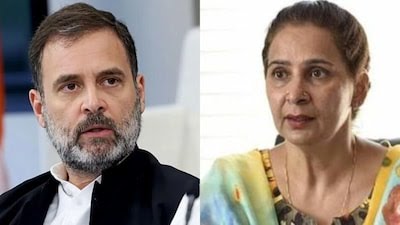
Expelled Congress leader and former Punjab minister Navjot Kaur Sidhu has publicly criticised Lok Sabha Leader of Opposition Rahul Gandhi, questioning his leadership style and accessibility within the party structure. She suggested that Gandhi has yet to demonstrate an inclusive approach and remains influenced by a legacy-driven mindset. Sidhu also expressed admiration for Prime Minister Narendra Modi, describing him as deeply spiritual and reflective in his public persona. Her remarks, including a pointed observation that taking eight months to grant a meeting is “not right,” signal ongoing internal tensions within the Congress party and broader shifts in political alignment.
Direct Criticism of Rahul Gandhi’s Leadership
Navjot Kaur Sidhu, formerly associated with the Congress party in Punjab, delivered a sharp critique of Rahul Gandhi, who currently serves as Leader of Opposition in the Lok Sabha.
Sidhu questioned Gandhi’s approach to leadership, stating that she finds it difficult to understand his working style. According to her, he has not yet reached a stage where he treats party members equally or remains consistently open to dialogue. She implied that his leadership reflects an inherited political framework rather than an adaptive, consultative model suited to contemporary party dynamics.
Her remarks suggest dissatisfaction with what she perceives as limited accessibility to party leadership, particularly for those who consider themselves constructive advisors or well-wishers.
“Eight Months to Meet Is Not Right”
One of Sidhu’s most pointed observations concerned the time taken to secure an audience with Gandhi. She stated that waiting eight months for a meeting is “not right,” signaling frustration over communication gaps within the party’s leadership structure.
Political observers note that accessibility and internal consultation remain critical factors in managing party cohesion, particularly during periods of electoral recalibration. Sidhu’s comment may resonate with sections of the party cadre who have sought more direct engagement with senior leadership.
Her remarks reflect broader concerns about organizational responsiveness and internal democratic processes within national political parties.
Praise for Prime Minister Narendra Modi
In contrast to her criticism of Gandhi, Sidhu praised Narendra Modi, describing the Prime Minister as “very spiritual” and asserting that this quality is evident in his personality.
She suggested that Modi’s spiritual orientation influences his leadership demeanor and public conduct. Such comments mark a notable departure from traditional partisan lines, especially coming from a former Congress minister.
Political analysts view this as an example of how ideological narratives increasingly incorporate personal attributes, such as spirituality and leadership temperament, into public evaluation.
Implications for Congress and National Politics
Sidhu’s statements arrive at a time when the Congress party continues to recalibrate its organizational structure and electoral strategy. Internal criticism from former senior leaders often amplifies existing debates over leadership style, generational transition and strategic direction.
Rahul Gandhi has led multiple nationwide campaigns aimed at strengthening grassroots connections. However, critiques such as Sidhu’s highlight persistent perceptions among some former members regarding centralization and limited internal dialogue.
Meanwhile, Prime Minister Modi’s leadership continues to draw support from those who emphasize decisiveness, ideological clarity and personal discipline as defining characteristics.
Political Context and Strategic Signals
Public commentary by former party leaders can influence both grassroots morale and national political narratives. Sidhu’s remarks may reflect broader strategic positioning within Punjab’s evolving political landscape.
In parliamentary democracies, leadership evaluation often extends beyond policy positions to include accessibility, communication style and symbolic appeal. The juxtaposition of criticism toward Gandhi and praise for Modi underscores the competitive contrast shaping contemporary Indian politics.
Conclusion
Navjot Kaur Sidhu’s comments introduce fresh debate over leadership dynamics within the Congress party while simultaneously acknowledging attributes she admires in Prime Minister Narendra Modi. Her assertion that prolonged delays in granting meetings are “not right” highlights concerns about internal engagement and responsiveness.
As national politics intensifies ahead of future electoral contests, leadership perception—both within parties and among the electorate—will remain a decisive factor shaping India’s political trajectory.