Nitish Kumar Sworn in as Bihar Chief Minister; 26-Minister Cabinet Includes Women and Minority Representation
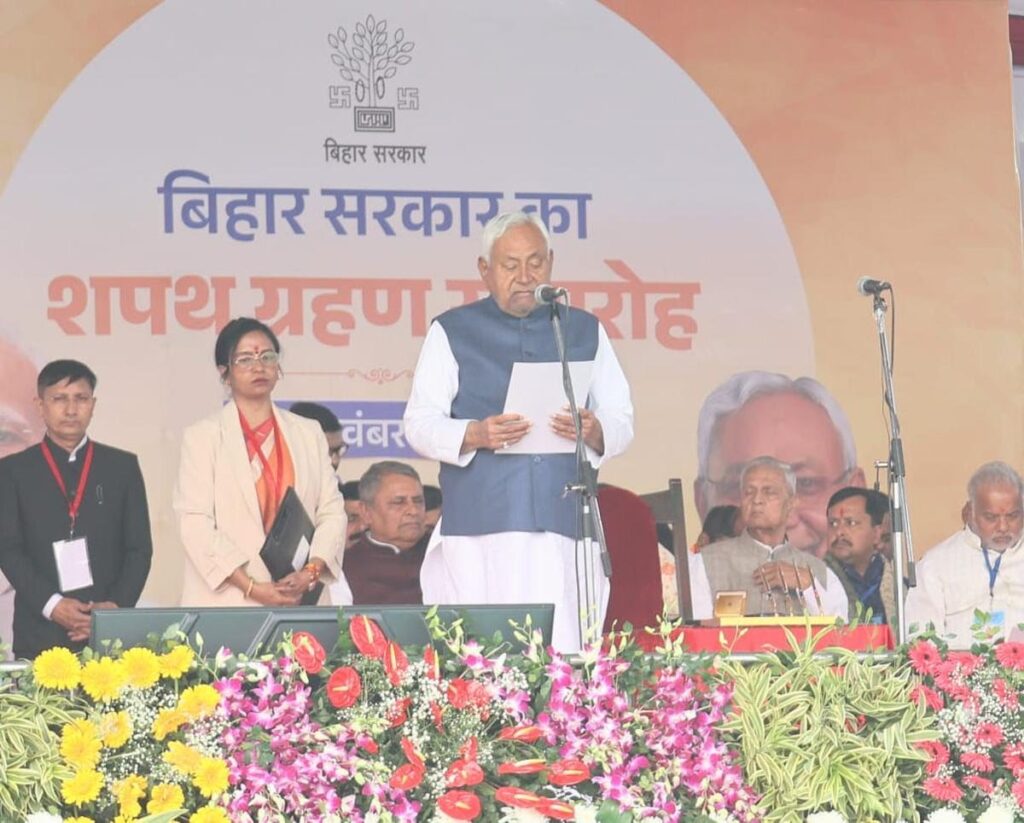
Nitish Kumar was sworn in once again as the Chief Minister of Bihar, marking continuity in leadership after the recent state assembly elections. Alongside him, 26 ministers took oath, reflecting a strategic blend of experience, political balance, and inclusivity. The cabinet notably includes one Muslim minister and three women, underscoring efforts toward representation in governance. Analysts highlight that the composition signals both consolidation of JD(U)’s political base and responsiveness to social diversity in the state. The administration is expected to focus on development, infrastructure, and welfare schemes, while navigating coalition dynamics and maintaining stability in Bihar’s complex political landscape.
Nitish Kumar Assumes Office
Nitish Kumar, a seasoned political figure in Bihar, took the oath of office as Chief Minister amid a formal ceremony attended by party leaders and officials. His return underscores sustained voter confidence and positions him to steer the state through policy priorities, including economic growth, social welfare, and administrative reforms.
Cabinet Composition and Inclusivity
The new cabinet comprises 26 ministers, with representation carefully balanced across social and political lines. The inclusion of one Muslim minister and three women ministers reflects a deliberate effort to ensure diversity and inclusion. Political analysts note that this composition may strengthen public perception of an inclusive government while addressing key demographic constituencies.
Strategic Political Implications
Beyond representation, the cabinet formation reflects strategic coalition management. JD(U) continues to consolidate its influence while maintaining partnerships with allied parties. Observers suggest that this approach will facilitate legislative cooperation and smoother implementation of governance initiatives.
Governance Priorities
The administration is expected to prioritize infrastructure development, social welfare programs, education, and employment generation. Economic analysts anticipate that policy continuity, coupled with targeted reforms, may enhance investment prospects and public service delivery, fostering stability and growth in Bihar’s socio-economic landscape.
Looking Ahead
Nitish Kumar’s renewed leadership, paired with a diverse cabinet, positions Bihar to navigate both political and developmental challenges. The state’s governance trajectory will likely focus on balancing inclusivity with effective administration, ensuring sustainable progress while maintaining coalition cohesion.