Pahalgam Terror Probe Expands Globally as Court Seeks China’s Assistance in Mobile Supply Chain Trail
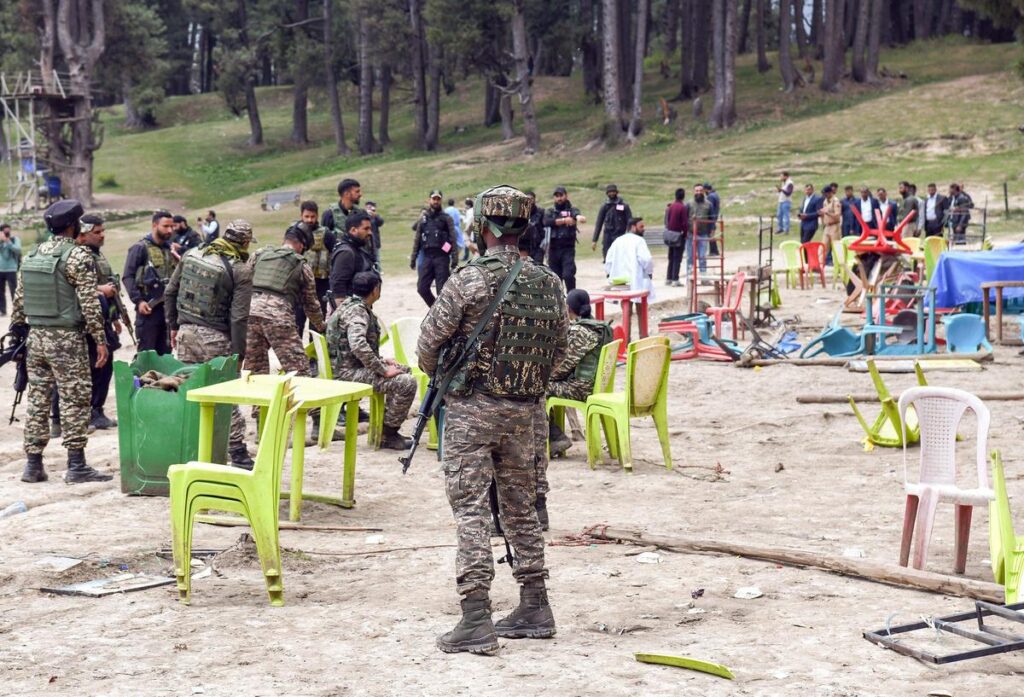
A Special Court in Jammu has issued a Letter Rogatory to judicial authorities in China, seeking assistance in tracing the supply chain and end-user details of a mobile phone linked to the investigation into last year’s Pahalgam terror attack. The move follows an application by the National Investigation Agency under Section 112 of the Bharatiya Nagarik Suraksha Sanhita. The April 22 assault at the hill resort claimed 25 tourists and a local guide, and was attributed to operatives associated with Lashkar-e-Taiba and its proxy formation. Investigators believe digital forensics and international cooperation will be central to establishing the wider conspiracy.
Court Seeks International Cooperation in Terror Probe
In a significant procedural development, a Special NIA Court in Jammu has issued a Letter Rogatory to the competent judicial authority in China. The request seeks assistance in tracing the manufacturing origin, distribution chain and end-user details of a mobile handset recovered during the investigation into the Pahalgam terror attack.
The order was passed following an application filed by a Deputy Inspector General of the National Investigation Agency under Section 112 of the Bharatiya Nagarik Suraksha Sanhita. A Letter Rogatory is a formal judicial request sent to a foreign court for assistance in collecting evidence or facilitating inquiries across jurisdictions.
Officials indicated that the mobile device is believed to hold critical evidentiary value, potentially linking operatives, handlers and logistical networks beyond Indian territory.
Background: The Pahalgam Attack
The investigation relates to the April 22 attack at Pahalgam, a prominent tourist destination in south Kashmir. Gunmen opened fire at the hill resort, resulting in the deaths of 25 tourists and a local guide, marking one of the deadliest civilian-targeted incidents in the region in recent years.
The probe has alleged involvement of operatives affiliated with the Pakistan-based outfit Lashkar-e-Taiba, as well as individuals linked to its proxy formation, The Resistance Front. The agency has already filed charges against four accused individuals, identifying them as part of a broader cross-border conspiracy.
Digital Forensics and Cross-Border Trails
Investigators believe the recovered mobile handset could provide insights into communication patterns, encrypted messaging trails and financial transactions. Tracing the device’s supply chain may reveal intermediaries, distributors and potential facilitators operating in multiple jurisdictions.
Such inquiries often require cooperation under mutual legal assistance frameworks, particularly when electronic components are manufactured or assembled abroad. The issuance of a Letter Rogatory underscores the increasing reliance on digital evidence in counterterrorism investigations.
Security analysts note that mobile devices frequently serve as crucial nodes in terror financing and operational coordination, offering forensic entry points into otherwise opaque networks.
Legal Framework and Procedural Significance
The application was filed under provisions of the Bharatiya Nagarik Suraksha Sanhita, which governs procedural aspects of criminal investigations and judicial cooperation. By invoking Section 112, the investigating agency sought formal judicial backing to request international legal assistance.
Legal experts say such measures strengthen evidentiary chains and enhance admissibility standards in terrorism trials. The court’s intervention signals that the investigation has entered a stage where foreign-sourced technical data may play a decisive role in substantiating charges.
Broader Security Implications
The Pahalgam attack rekindled concerns about the targeting of civilian and tourism infrastructure in Jammu and Kashmir. Authorities have since intensified counterterror operations and intelligence coordination to prevent further incidents.
The pursuit of digital and supply chain evidence beyond national borders reflects a broader shift in counterterror strategy—one that recognizes the transnational character of modern extremist networks. Whether through encrypted platforms, offshore funding channels or foreign-manufactured hardware, investigators increasingly confront globalized operational footprints.
Conclusion
The issuance of a Letter Rogatory marks a pivotal step in the Pahalgam terror investigation, extending the inquiry into international territory. As authorities seek to unravel the technological and logistical backbone of the conspiracy, cross-border legal cooperation is likely to shape the next phase of proceedings.
The outcome may not only influence the prosecution of the accused but also reinforce the importance of coordinated global mechanisms in combating terrorism’s evolving digital architecture.