PM Modi Hails Indian Women’s Kabaddi Team After Grand Slam at the 2025 World Cup
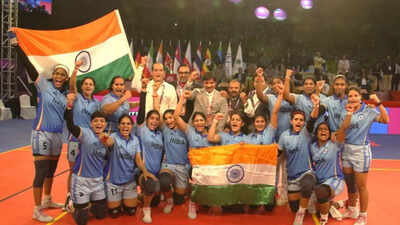
In a stirring demonstration of athletic excellence, the Indian women’s kabaddi team clinched their second consecutive World Cup title, defeating Chinese Taipei 35–28 in the final held in Dhaka. Prime Minister Narendra Modi lauded their grit, skill, and unwavering spirit, declaring the triumph a source of inspiration for countless young athletes across the nation. The victory underscores the rapid ascent of women’s kabaddi on the global stage and reaffirms India’s dominant position in the sport.
Historic Victory in Dhaka
The Indian women’s kabaddi team delivered a commanding performance throughout the tournament, culminating in a hard-fought 35-28 win over Chinese Taipei in the final. Their semi-final journey saw them overcome Iran with a 33–21 scoreline, after an unblemished group-stage run. This back-to-back World Cup win firmly cements India’s stature in women’s kabaddi on the global stage.
PM Modi’s Message of Encouragement
Prime Minister Narendra Modi took to X (formerly Twitter) to congratulate the champions, lauding their “outstanding grit, skills and dedication.” In his message, he emphasized that their success would inspire young athletes to dream bigger and aim higher — a clarion call for India’s next generation to pursue kabaddi professionally.
Rising Star: Sanju Devi’s Breakout Performance
A standout in the squad was Sanju Devi, hailing from Korba, Chhattisgarh. She played a pivotal role in the final, scoring a match-high 16 raid points, including a dramatic four-point “super raid.” Her journey from a modest background — she trains at a government-run girls’ kabaddi academy — to being named “Player of the Tournament” underscores the growing reach and democratization of women’s sports in India.
A Testament to Women’s Kabaddi Growth
With 11 countries participating in the World Cup, the tournament highlighted the rapidly expanding global footprint of women’s kabaddi. Critics and supporters alike are hailing India’s back-to-back success as more than just a sporting victory — it’s a signal that women’s kabaddi is maturing into a serious international competitive discipline.
Coaches and veterans have not held back their praise. Haryana Steelers’ coach Manpreet Singh commended the team’s belief and cohesion. Meanwhile, Ajay Thakur, former national captain and Pro Kabaddi League coach, noted that the title defense reflects not just technical prowess but also the deepening professional culture around women’s kabaddi.
Strategic Impact & Broader Implications
- Sporting Inspiration: The PM’s public recognition will likely boost visibility for kabaddi among young girls and reinforce the sport’s appeal beyond traditional heartlands.
- Policy Momentum: Such a high-profile win strengthens the case for more investment in grassroots training facilities and government-backed programmes for women’s kabaddi.
- International Growth: The diversity of teams in the World Cup suggests that kabaddi’s global expansion is not just aspirational — it’s becoming a reality.
- Social Change: Sanju Devi’s rise from a rural academy to global champion may serve as a powerful narrative of empowerment, challenging socio-economic barriers in sport.
Conclusion
The Indian women’s kabaddi team’s emphatic win at the 2025 World Cup in Dhaka is not just a sporting milestone — it is a cultural moment. With their blend of technical mastery, tenacity, and teamwork, they have captured the national imagination. Prime Minister Modi’s heartfelt tribute further amplifies their achievement, framing it as a catalyst for broader change in India’s approach to women’s sport. Their victory is likely to resonate long beyond the mat — in policy corridors, training academies, and most importantly, in the dreams of young aspiring athletes.