Political Churn in Bihar: Speculation Mounts Over Nitish Kumar’s Future Amid Rajya Sabha Deadline
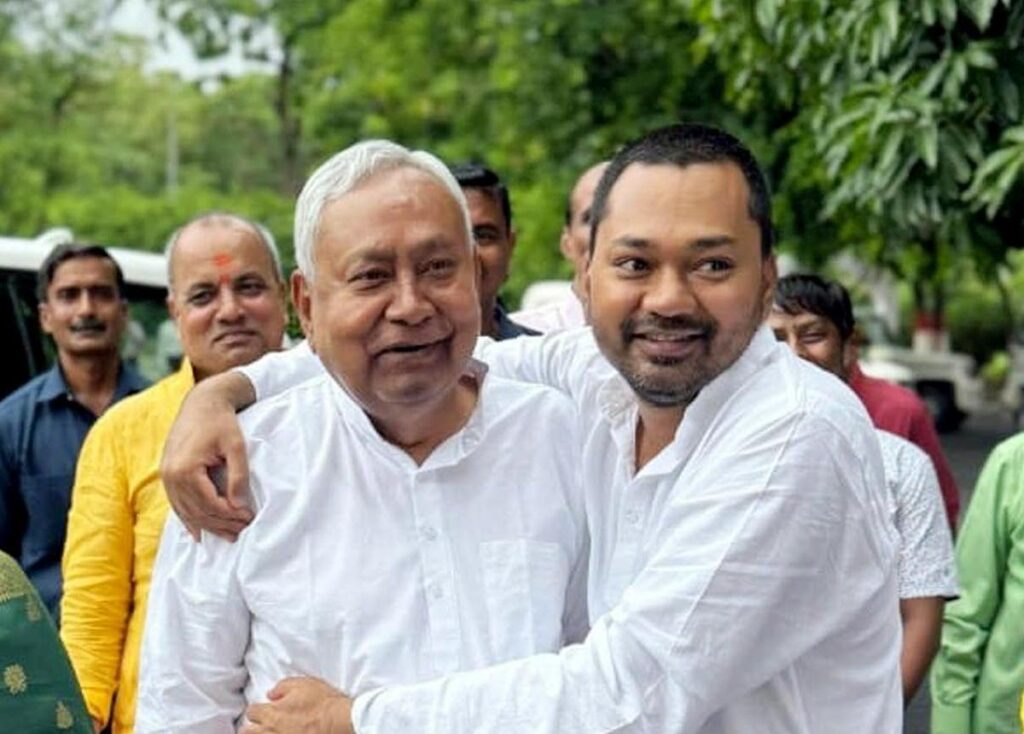
Amid Holi celebrations across Bihar, intense political maneuvering in Patna fueled speculation that Chief Minister Nitish Kumar may step down and seek entry into the Rajya Sabha. With nominations for the Upper House closing on March 5, 2026, discussions within the ruling coalition gained urgency. Political observers suggested a possible leadership transition in which the Bharatiya Janata Party, the Janata Dal (United)’s ally, could assume the chief ministerial post. Simultaneously, reports indicated that Kumar’s son, Nishant Kumar, may formally enter politics, potentially as Deputy Chief Minister. Though no official confirmation emerged, high-level meetings signaled significant strategic deliberations.
Speculation Intensifies Ahead of Rajya Sabha Deadline
Political developments in Bihar gathered momentum on March 4, 2026, as conversations within the state capital centered on the potential resignation of Chief Minister Nitish Kumar. The timing is significant: nominations for the Rajya Sabha election close on March 5, compressing the window for strategic decisions.
Sources within political circles indicated that Kumar, who heads the Janata Dal (United), could opt for a parliamentary role at the national level. Such a move would mark a pivotal shift in Bihar’s political architecture, especially given the state’s coalition dynamics.
While no formal statement has been issued, the intensity of internal consultations suggests that discussions have moved beyond routine speculation.
Coalition Calculus and Power-Sharing Dynamics
The JD(U) governs Bihar in alliance with the Bharatiya Janata Party, a partnership that has oscillated between collaboration and recalibration over the years. Analysts note that if Kumar transitions to the Rajya Sabha, the BJP could stake a claim to the chief minister’s position under a revised power-sharing arrangement.
Such a development would represent a significant rebalancing within the coalition. Political strategists suggest that leadership realignment could strengthen the alliance ahead of upcoming electoral cycles, while also consolidating influence at the national level.
The potential restructuring underscores how coalition politics in Bihar often hinge on timing, arithmetic and long-term strategic positioning rather than immediate electoral compulsions.
Emergence of Nishant Kumar
Parallel to the leadership speculation, attention has turned to Kumar’s son, Nishant Kumar, who is reportedly preparing to enter active politics. Senior JD(U) leaders have indicated that his formal political debut could coincide with broader leadership changes.
Though details remain fluid, some within party ranks have suggested the possibility of Nishant Kumar assuming the role of Deputy Chief Minister. If realized, this would signal generational transition within the JD(U), positioning the party for continuity while navigating coalition adjustments.
The move would also represent a strategic attempt to blend experience with renewal — a common recalibration mechanism in regional parties facing evolving voter expectations.
Closed-Door Deliberations Signal Strategic Shift
On March 4, senior party leaders convened at the Chief Minister’s official residence in Patna, known as 1, Anne Marg. Among those present were JD(U) working president Sanjay Kumar Jha and Union Minister Rajeev Ranjan Singh, widely known as Lalan Singh.
The high-profile nature of the meeting heightened speculation. Although party representatives refrained from public comment, the congregation of key decision-makers suggests coordinated deliberations rather than informal consultations.
In Indian politics, symbolism often carries as much weight as formal announcements. The convergence of senior figures on the eve of the nomination deadline indicates that critical decisions may be imminent.
Implications for Bihar and National Politics
If Kumar transitions to the Rajya Sabha, it would not merely mark a personal career shift but also recalibrate Bihar’s governance framework. His tenure as Chief Minister has been defined by coalition agility and administrative pragmatism. A move to Parliament could reposition him as a strategic voice in national debates while allowing a new leadership arrangement to evolve in Patna.
For investors and policy observers, political stability in Bihar remains central to infrastructure execution, fiscal management and social-sector spending. Any leadership change will be assessed through the prism of administrative continuity and reform momentum.
As Holi festivities unfolded across the state, Bihar’s political corridors reflected a different kind of color — one shaped by negotiation, ambition and strategic foresight. Whether speculation crystallizes into formal announcement will likely become clear once the Rajya Sabha nomination window closes.