The Eternal Legacy of Sikhism: Guiding Light of the Ten Gurus and the Guru Granth Sahib Ji
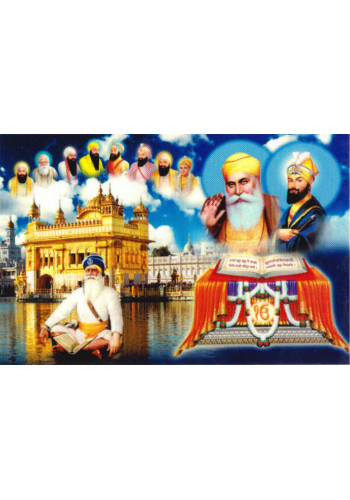
Sikhism, founded in the late 15th century in the Indian subcontinent, stands as a profound spiritual tradition rooted in equality, devotion, and service. The religion evolved over ten successive Gurus, each contributing essential teachings, institutional structures, and cultural foundations that shaped Sikh identity. Their combined wisdom, infused with universal principles of justice, compassion, and humility, culminated in the installation of the Sri Guru Granth Sahib Ji as the eternal Guru. Today, Sikh philosophy continues to influence millions across the world—through its emphasis on ethical living, social justice, and spiritual discipline, forming a timeless beacon for humanity.
Introduction: A Faith Built on Spiritual Progression
Sikhism emerged as a powerful spiritual movement advocating equality, truth, and compassion in a period marked by societal inequity and religious orthodoxy. From Guru Nanak Dev Ji’s revolutionary message of divine unity and human oneness to Guru Gobind Singh Ji’s establishment of the Khalsa, each Guru advanced the mission of uplifting society and promoting spiritual enlightenment. The transition from human Gurus to the eternal scripture represents a remarkable institutional evolution, safeguarding divine wisdom for future generations.
The Founding Vision: Guru Nanak Dev Ji
Guru Nanak Dev Ji (1469–1539) laid the foundation of Sikh philosophy through a message grounded in Ek Onkar — the belief in one universal Creator. He rejected social hierarchies, caste divisions, and superstitious practices, instead emphasizing truthful living, selfless service (seva), and remembrance of God (naam simran). His travels across regions and interfaith dialogues established Sikhism as an inclusive, reformative spiritual path.
Strengthening the Sikh Community: The Progressive Gurus
Successive Gurus expanded the spiritual and social architecture of Sikhism:
- Guru Angad Dev Ji standardized the Gurmukhi script, reinforcing literacy and cultural identity.
- Guru Amar Das Ji promoted gender equality and community kitchen (langar) practices at scale.
- Guru Ram Das Ji founded Amritsar, envisioning a spiritual and communal center.
- Guru Arjan Dev Ji compiled sacred hymns into the Adi Granth and oversaw the construction of the Harmandir Sahib — symbolizing openness and divine humility.
Their guidance cultivated unity, spiritual depth, and a shared cultural ethos.
Endurance, Defense, and Sovereignty: Later Gurus
The subsequent Gurus steered Sikhism through periods of political turbulence, affirming courage and dignity:
- Guru Hargobind Sahib Ji introduced the concept of Miri-Piri, blending spiritual and temporal authority.
- Guru Har Rai Ji continued humanitarian missions and environmental stewardship.
- Guru Har Krishan Ji, despite his young age, became a symbol of purity and compassion.
- Guru Tegh Bahadur Ji sacrificed his life to defend religious freedom, exemplifying ultimate courage and resistance to tyranny.
- Guru Gobind Singh Ji formalized the Khalsa in 1699, transforming Sikhs into a disciplined collective dedicated to justice, righteousness, and service.
His final proclamation bestowed spiritual authority upon the scripture, ensuring eternal continuity of divine guidance.
Sri Guru Granth Sahib Ji: The Living Guru
In 1708, Guru Gobind Singh Ji declared the Sri Guru Granth Sahib Ji as the eternal Guru of the Sikhs. This scripture, comprising hymns of Sikh Gurus and enlightened saints from diverse backgrounds, embodies universal wisdom. It rejects rituals, endorses ethical living, and champions equality. Serving as the spiritual and moral compass for Sikhs, the Guru Granth Sahib Ji is revered not only as a text but as living guidance.
Continuing Influence and Global Relevance
Sikh teachings resonate globally, advocating fairness, inclusivity, and selfless service. From community kitchens serving millions to humanitarian initiatives worldwide, Sikhs embody values championed by the Gurus. The religion’s emphasis on hard work, humility, and charity remains profoundly relevant in a rapidly changing world.
Conclusion
From Guru Nanak Dev Ji to the eternal wisdom of the Sri Guru Granth Sahib Ji, Sikhism presents a complete spiritual framework grounded in universal love, justice, and human equality. Its teachings transcend time, offering a moral compass for modern society. The enduring contribution of the Sikh Gurus continues to illuminate hearts, strengthen communities, and inspire generations toward a life rooted in truth and service.