Microsoft Positions 32GB RAM as the New Standard for High-End Windows 11 Gaming
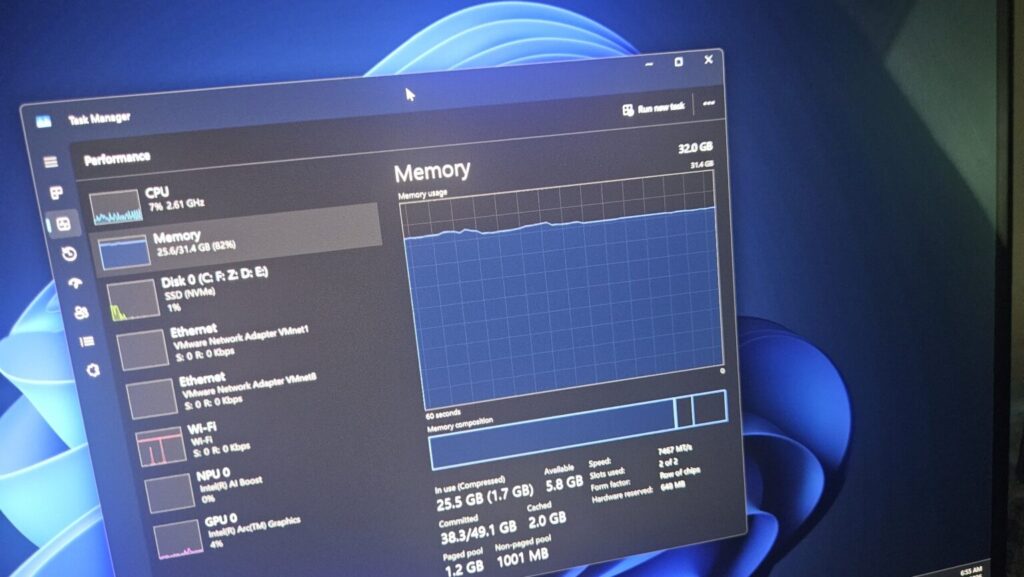
Microsoft has indicated that 32GB of RAM should be considered the optimal configuration for serious gamers using Windows 11, signaling a shift in expectations for high-performance personal computing. The company also highlighted the emerging category of Copilot+ PCs as well-suited for gaming, citing their advanced processing capabilities and AI integration. The guidance reflects the growing resource demands of modern titles, real-time ray tracing, AI-driven game mechanics and multitasking environments. As hardware requirements evolve, the announcement underscores how gaming performance, artificial intelligence and operating system optimization are increasingly converging in the premium PC segment.
A New Benchmark for Gaming Performance
Microsoft’s recommendation that 32GB of memory represents the “ideal” configuration for serious gaming on Windows 11 marks a notable recalibration of hardware expectations. For years, 16GB of RAM was widely considered sufficient for mainstream gaming. However, the increasing complexity of modern titles — including expansive open worlds, advanced physics engines and high-resolution textures — has pushed memory consumption significantly higher.
Games developed for current-generation hardware frequently utilize substantial system resources, especially when paired with background applications such as streaming software, voice communication tools and performance monitoring utilities. In this environment, 32GB of RAM provides a performance cushion, reducing bottlenecks and improving frame stability.
Windows 11 and Resource Optimization
Windows 11 is engineered to leverage advanced hardware architectures, including hybrid processors and AI acceleration. Features such as DirectStorage, Auto HDR and improved CPU scheduling are designed to enhance gaming efficiency. However, these capabilities can also increase baseline system demands.
DirectStorage, for instance, allows faster asset loading by reducing CPU overhead, but high-resolution assets still require adequate system memory to operate seamlessly. Similarly, AI-enhanced features embedded within the operating system — including background productivity tools — consume resources that may affect gaming performance on lower-memory systems.
By recommending 32GB, Microsoft appears to be future-proofing user expectations, aligning system configurations with evolving software design.
Copilot+ PCs: AI Meets Gaming
The company also emphasized Copilot+ PCs as suitable platforms for gamers. These devices are built around next-generation processors featuring neural processing units (NPUs), designed to handle AI-driven workloads efficiently.
While Copilot+ branding primarily focuses on AI-powered productivity features, the hardware foundation — including improved power efficiency, faster memory architecture and dedicated AI acceleration — can benefit gaming environments as well. Real-time AI upscaling, adaptive performance tuning and intelligent background management are emerging use cases that could enhance gameplay experiences.
From a strategic standpoint, positioning Copilot+ systems as gaming-capable expands their market appeal beyond productivity users and into enthusiast segments.
The Economics of Upgrading
Upgrading from 16GB to 32GB of RAM represents a measurable but increasingly justified investment for high-performance users. Memory prices have fluctuated in recent years, but expanded capacity is becoming more accessible relative to overall system costs.
For competitive gamers, streamers and content creators, the incremental expenditure may yield tangible benefits in multitasking performance and long-term system viability. As software developers continue to optimize for high-memory environments, lower configurations could experience diminishing returns over time.
This shift mirrors historical trends in PC evolution, where once-premium specifications gradually become baseline requirements.
Industry Implications
Microsoft’s guidance carries influence across the hardware ecosystem. Original equipment manufacturers, component suppliers and retailers often align product positioning with operating system recommendations. If 32GB becomes widely perceived as the new performance standard, consumer demand may shift accordingly.
Such a transition could also impact the resale value of lower-memory systems and accelerate refresh cycles within the enthusiast community. For semiconductor manufacturers, higher average memory configurations translate into greater per-unit revenue potential.
The Future of Gaming Hardware Standards
The convergence of AI, high-fidelity graphics and increasingly immersive gameplay is redefining hardware expectations. What was once considered excess capacity is quickly becoming prudent provisioning.
By advocating 32GB of RAM for serious gamers and highlighting AI-powered Copilot+ PCs, Microsoft signals a broader transformation in the PC landscape — one where gaming performance, artificial intelligence and operating system optimization are deeply interconnected.
As developers continue to push technical boundaries, memory capacity is no longer a secondary specification. It is becoming central to delivering the seamless, high-resolution experiences that define modern gaming.